
🌙 ماہِ ربیع الاول خصوصی سیریز 2026 🌙 یہ مضمون ہماری خصوصی ماہِ ربیع الاول سیریز 2026 کا حصہ ہے، جس میں اردو و پنجابی کے ممتاز نعت گو شعرا کی زندگی، فن اور نعتیہ شاعری کو خراجِ عقیدت پیش کیا جا رہا ہے۔ اس سلسلے کا مقصد ان شعرا کے عشقِ رسول ﷺ، ادبی خدمات اور نعتیہ کلام کو قارئین تک پہنچانا ہے۔ ماہرؔ القادری — حیات، ادبی خدمات اور نعتیہ شاعری منظور حسین المعروف ماہرؔ القادری مظفر وارثی پر میرا بلاگ پڑھنے کے لئے یہاں کلک کریں ماہرؔ القادری کا تعارف نام منظور حسین اور تخلص ماہرؔ تھا۔ وہ اردو ادب کے ممتاز شاعر، ادیب، نعت گو، نقاد اور صاحبِ اسلوب قلم کار تھے۔ اسلامی اقدار، تہذیبی روایات اور نعتیہ ادب سے ان کا گہرا تعلق تھا۔ ان کی شخصیت نے اردو ادب میں ایک منفرد مقام پیدا کیا۔ ماہرؔ القادری 30 جولائی 1906ء کو کیسر کلاں، ضلع بلند شہر، اترپردیش، متحدہ ہندوستان میں پیدا ہوئے۔ 1926ء میں علی گڑھ سے میٹرک کرنے کے بعد عملی زندگی کا آغاز حیدرآباد دکن سے کیا۔ بعد ازاں بجنور چلے گئے جہاں انہوں نے مدینہ بجنور اور غنچہ کے مدیر کی حیثیت سے ...
watch my youtube channel
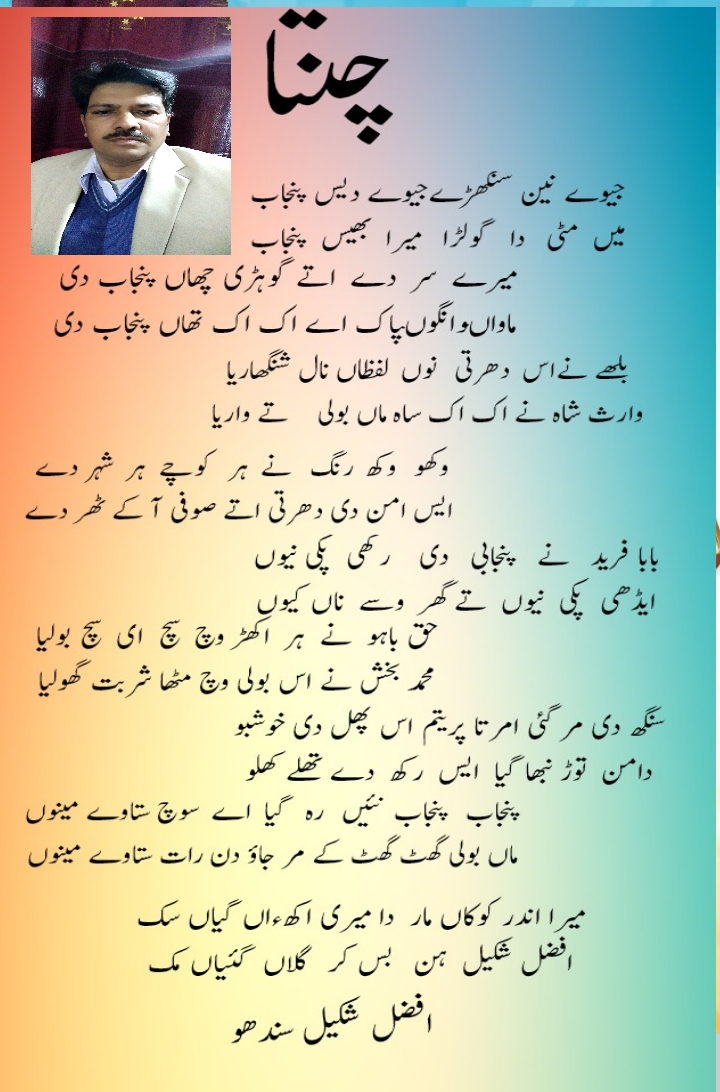
چنتا
پنجاب دی دھرتی، ماں بولی تے صوفی روایت نوں خراجِ عقیدت پیش کردا اک دل سوز کلام
جیوے نین سنکھڑے جیوے دیس پنجاب
میں مٹی دا گولڑا میرا بھیس پنجاب
میرے سر دے اتے گوہڑی چھاں پنجاب دی
ماواں وانگوں پاک اے اک اک تھاں پنجاب دی
بلھے نے اس دھرتی نوں لفظاں نال شنگھاریا
وارث شاہ نے اک اک ساہ ماں دھرتی تے واریا
وکھو وکھ رنگ نے ہر کوچے ہر شہر دے
ایس امن دی دھرتی اتے صوفی آ کے ٹھر دے
بابا فرید نے پنجابی دی رکھی پکی نیوں
ایڈھی پکی نیوں تے گھر وسے نا کیوں
حق باہو نے ہر اکھڑ وچ سچ ای سچ بولیا
محمد بخش نے اس بولی وچ میٹھا شربت گھولیا
سنگھ دی مر گئی امرتا پریتم اس پھل دی خوشبو
دامن توڑ نبھا گیا اس رکھ دے تھلے کھلو
پنجاب پنجاب نئیں رہ گیا اے سوچ ستاوے مینو
ماں بولی گھٹ گھٹ کے مر جاو دن رات ستاوے مینو
میرا اندر کوکاں مار دا میری اکھاں گیاں سک
افضل شکیل ہن بس کر گلاں گئیاں مک
نظم دی تشریح
ایہ نظم پنجاب دی مٹی، ثقافت، تے روحانی روایت نوں بیان کردی اے۔ شاعر اپنے آپ نوں پنجاب دی مٹی نال جوڑ کے اک ایسی شناخت پیش کردا اے جو نہ صرف زمین نال بلکہ تاریخ تے روایت نال وی جڑی ہوئی اے۔
پہلے اشعار وچ شاعر پنجاب نوں اپنی پہچان بناندا اے۔ اوہ کہندا اے کہ اوہ مٹی دا بنا ہویا اے تے اوہدی پہچان وی پنجاب اے۔ ایہ اک گہری محبت تے وابستگی دا اظہار اے۔
اگلے اشعار وچ پنجاب دی پاکیزگی تے ماں ورگی شفقت دا ذکر اے۔ پنجاب دی ہر جگہ نوں ماں دی طرح پاک تے مقدس قرار دتا گیا اے۔
شاعر صوفیاء دی خدمات نوں یاد کردا اے۔ بلھے شاہ، وارث شاہ، بابا فرید، باہو تے محمد بخش ورگے عظیم صوفیاء نے نہ صرف پنجابی زبان نوں زندہ رکھیا بلکہ انسانیت نوں محبت دا درس وی دتا۔
نظم وچ موجود درد دا اصل مرکز ایہ اے کہ آج دا پنجاب اوہ نہیں رہیا جو پہلے سی۔ ماں بولی دی حالت زار تے شاعر دا دل دکھیا ہویا اے۔
ایہ نظم صرف شاعری نہیں بلکہ اک پیغام اے — اپنی زبان، ثقافت تے شناخت نوں بچان دا پیغام۔
شاعر دے الفاظ دل وچ درد پیدا کردے نیں تے قاری نوں سوچن تے مجبور کردے نیں کہ اسی اپنی اصل توں کتنا دور ہو چکے آں۔
ایہ کلام پنجابی ادب دی خوبصورتی تے سادگی دا بہترین نمونہ اے۔ ہر مصرعہ محبت، درد تے حقیقت دا امتزاج اے۔
آج دے دور وچ جدوں مادری زباناں ختم ہون دے خطرے وچ نیں، ایہ نظم اک وڈی یاد دہانی اے کہ اپنی زبان نوں زندہ رکھنا ساڈی ذمہ داری اے۔
اپنا تبصرہ لکھیں
"چنتا" افضل شکیل سندھو دی اک دل نوں چھو لَن والی پنجابی نظم اے۔ ایہ نظم پنجاب دی خوبصورتی، صوفی ورثے تے ماں بولی نال محبت نوں ظاہر کردی اے۔ نال ایہ پنجابی زبان دی گرتی حالت اُتے وی اک گہرا دکھ بیان کردی اے۔ اس نظم وچ بلھے شاہ، وارث شاہ، بابا فرید، سلطان باہو تے میاں محمد بخش دا ذکر وی کیتا گیا اے
Punjabi Tags:پنجابی شاعری، پنجاب، صوفی شاعری، افضل شکیل سندھو، پنجابی نظم، پنجابی زبان، ماں بولی، پنجابی ادب، بلھے شاہ، وارث شاہ، بابا فرید، سلطان باہو، میاں محمد بخش
Punjabi Kavita - Punjabi Poetry
English Description: "Chanta" is a deeply emotional Punjabi poem written by Afzal Shakeel Sandhu. This poem reflects the beauty of Punjab, its rich Sufi heritage, and the love for motherland. It also highlights the gradual decline of Punjabi language and identity in modern times. The poem mentions great Sufi poets like Bulleh Shah, Waris Shah, Baba Farid, Sultan Bahoo, and Mian Muhammad Bakhsh, who enriched Punjabi literature. This poetry is perfect for those who love Punjabi culture, Sufi poetry, and meaningful literature
🎥 If you enjoy mypoetry and literary content, don’t miss out on my YouTube channel! Click the button below to watch, subscribe, and stay updated with my latest videos.
👉 Watch & Subscribe to Afzal Shakeel Sandhu
Hm sb ko apni maan boli Punjabi k survival k liye bareek beeni se sochna ho ga haqeeqat mn aap ki chinta or fikr be mani nhi hey,hm sb ko chinta krni chahiye
ReplyDeleteKia bri baat ki hey
ReplyDeleteپنجابی زبان و ثقافت کا تحفظ سب کو مل کر کرنا چاہیئے یہ ایک ضروری امر ہے
ReplyDeleteپنجابی ہماری مادری زبان ہے اور اسکے سروائول کے لئیے ہمیں فکر مند ہونا چاہئیے خاص طور پر پنجابی لڑکیوں کو
ReplyDeleteتسیں پنجابی وچ وی بڑا سوہنا شعر آکھ لیندے او ہور توجہ دیو پنجابی آخر ماں بولی اے
ReplyDeleteماں بولی دی اینی چنتا دس دی اے کہ تسیں کنی مضبوطی نال اپنی رہتل تے سماج نال جڑے ہووے او
ReplyDelete